Reviewing Plastic Bag No Thank You Retro Svg for Embroidery
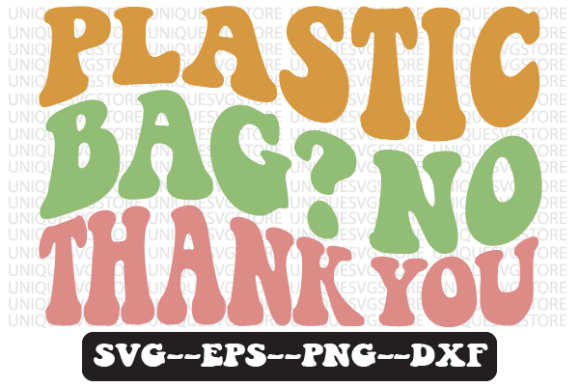
As a designer who spends half my life digitizing and the other half stitching, I have learned that not every graphic translates well to thread. We often see trendy Graphics online that look fantastic on a screen but turn into a tangled mess under the needle. That is why I took a close, practical look at the Plastic Bag No Thank You Retro Svg. This isn’t just about whether the image is cute; it is about whether it holds up as a viable machine embroidery design for real-world Crafts and commercial products.
The first thing that strikes you about this piece is its attitude. It carries a bold, retro environmental message that feels timely yet timeless. The typography and layout suggest a vintage aesthetic, which is currently dominating the handmade market. But from a technical standpoint, the critical question is: how do those curves and lines behave when converted from a flat print file into textured stitches? Let’s break down how this design performs in actual production scenarios.
First Impressions: Mood and Layout Analysis
The Plastic Bag No Thank You Retro Svg exudes a playful yet serious vibe. It is the kind of statement piece that stops people in their tracks. For an embroidery project, the visual personality is strong. The retro styling usually implies thicker lines and distinct shapes, which is generally good news for stitchers. Thin, wispy lines are the enemy of embroidery, often getting lost or breaking during wear. If this design maintains its structural integrity when scaled, it has high potential for visibility.
However, because this is marketed primarily as a printable PNG for sublimation, we must approach it with a digitizer’s eye. Sublimation designs can be incredibly detailed, relying on color gradients that embroidery cannot replicate. When evaluating this for stitching, I look for clear boundaries between colors. Does the text have enough spacing? Are the decorative elements too dense? These are the factors that determine if a design looks professional or amateurish on a finished product.
Real-World Application: From Screen to Stitch
I recently worked on a custom order for a local boutique specializing in eco-friendly goods. They wanted a signature item for their spring launch: a heavy canvas tote bag. The Plastic Bag No Thank You Retro Svg was the perfect candidate for this tote bag design. Canvas is forgiving; it handles higher stitch density well and provides a stable base for the needle.
In this scenario, the design acted as the centerpiece. I imagined it stitched in a contrasting thread color—perhaps a deep forest green on natural beige canvas. The result would be a crisp, readable message that aligns with the brand’s values. This is where the design shines: it turns a simple accessory into a conversation starter. For an Etsy seller or small shop owner, this kind of visual appeal directly drives buyer engagement. Customers aren’t just buying a bag; they are buying into an identity.
Beyond totes, consider sweatshirt embroidery. A crewneck sweatshirt offers a large, flat surface area ideal for medium-to-large designs. The retro font style of this svg would look particularly striking on the back of a hoodie, creating a bold statement piece. However, on a sweatshirt, you must account for the fabric’s stretch. Using the right stabilizer is non-negotiable here to prevent puckering around the letters.
Navigating Technical Challenges
While the design has strong potential, it is not without its pitfalls. Because the source file is described as a printable PNG, it lacks the inherent stitch data of a dedicated embroidery file. This means you, or your digitizer, must convert it carefully. Here is where many crafters stumble.
- Small Hoop Sizes: If you attempt to shrink this design to fit a 4x4 hoop for a pocket logo, the text may become illegible. Retro fonts often have unique quirks that disappear when scaled down. Always test the readability at your intended size.
- Textured Fabrics: On towels or fleece, the texture can interfere with fine details. If the design includes thin outlines, they might get swallowed by the pile of the fabric. In such cases, switching to a satin stitch border or increasing the line weight during digitization is crucial.
- Dark Fabric: If stitching on black or navy, ensure your thread colors have high contrast. A dark green on black will vanish. You may need to add a white underlay or choose brighter thread colors to make the finished product pop.
- Curved Surfaces: Applying this to a cap is risky. Caps have seams and curves that distort designs. Unless the design is specifically digitized for caps with appropriate pull compensation, it may look warped.
Another consideration is the density. If the retro elements are filled in completely, the stitch count could be high. High density on thin fabrics like onesies or lightweight t-shirts can cause stiffness and discomfort. For baby embroidery, I would recommend simplifying the fill or using an applique design technique where fabric patches cover the bulk of the shape, reducing the number of stitches directly on the garment.
Enhancing Product Value and Brand Consistency
For creative entrepreneurs, consistency is key. The Plastic Bag No Thank You Retro Svg fits seamlessly into a broader collection of eco-conscious design assets. Using this motif across various items—aprons, pillow covers, tea towels—creates a cohesive brand story. When customers see the same distinctive style across different products, it builds trust and recognition.
Moreover, the "retro" aspect taps into nostalgia, a powerful driver in current fashion trends. A well-executed embroidered version of this design feels premium compared to a printed vinyl transfer. Embroidery adds texture and depth, signaling quality. This perceived value allows small business owners to command higher price points. It transforms a basic handmade product into a boutique-quality item.
Practical Notes for the Embroidery Designer
Before you load this design into your machine for a client order, take these practical steps. First, always test on scrap fabric identical to your final material. Check how the threads interact with the weave. Second, review your thread color choices. A monochromatic look can be sophisticated, but ensure there is enough tonal variation to define the shapes.
Since this is sold as a printable product, verify the licensing terms explicitly. Can you use the printed version for commercial sales? If you are digitizing it yourself for embroidery, ensure you have the rights to create derivative works. Never assume a PNG license covers machine embroidery usage. Clarify this with the creator to protect your craft business.
Finally, consider the washability. Items like kitchen towels and baby clothes undergo frequent laundering. Ensure your stitch connections are secure and that you use high-quality rayon or polyester threads that resist fading. A faded message defeats the purpose of a bold statement design.
Final Verdict
The Plastic Bag No Thank You Retro Svg is a compelling choice for designers looking to add a touch of retro activism to their portfolio. It works best on stable, medium-to-heavy weight fabrics where its details can breathe. While it requires careful digitization and thoughtful placement, the payoff is a high-impact, conversation-starting piece. For the Etsy seller or hobbyist willing to put in the prep work, this design offers a solid foundation for creating memorable, marketable goods. Just remember: respect the fabric, check your tension, and let the thread do the talking.