Funny Dog: A Designer’s Review of Retro SVG Assets
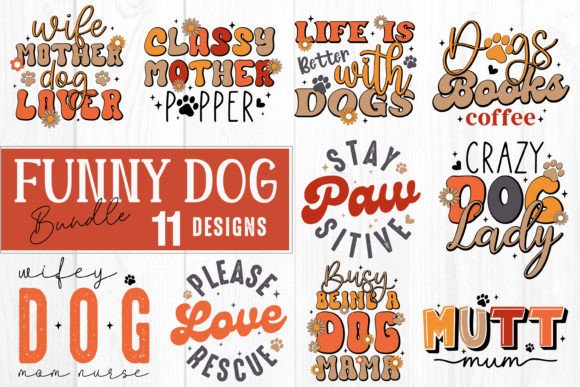
As a designer who has spent countless hours digitizing and testing embroidery files, I have learned that not all graphics translate well to thread. The gap between a crisp vector on a screen and a stitched reality is where many projects fail. Recently, I evaluated the Funny Dog design from the Retro Funny Dog Quote SVG Bundle to determine its viability for real-world commercial and personal use. This review focuses on how this asset performs when moved from digital Graphics into tangible Crafts, specifically looking at its potential for small business owners, Etsy sellers, and hobbyists.
First Impressions: Mood and Visual Personality
The immediate appeal of Funny Dog lies in its retro aesthetic. In the current market, nostalgia sells, but it must be executed with clean lines to remain legible. Upon opening the source files, the layout presents a balanced composition that feels playful yet structured. The theme suggests a lighthearted mood, making it an ideal candidate for personalized gifts and casual apparel. For an embroidery designer, the "funny" aspect is crucial; it needs to read instantly. If the viewer has to squint to get the joke, the design fails. Fortunately, the visual personality here is strong, relying on bold shapes that suggest high stitching clarity even before the first needle hits the fabric.
Real-World Application: From Screen to Stitch
To truly test a design, you must imagine it in a specific context. I visualized Funny Dog applied to a custom embroidered tote bag. Tote bags are staple items for craft businesses, but they present challenges due to their often coarse fabric texture. The retro style of this bundle works exceptionally well here because retro designs often tolerate a bit of rustic imperfection. The bold lines would stand out against canvas, creating a striking handmade product that appeals to buyers looking for unique, non-mass-produced items.
Beyond totes, I considered sweatshirt embroidery. A crewneck sweatshirt provides a stable, thick surface that supports denser stitching. Placing Funny Dog on the left chest or as a larger back print could elevate a basic garment into a boutique product. The design’s simplicity ensures it does not become stiff or uncomfortable, a common complaint with overly complex machine embroidery designs. For baby embroidery, such as on a onesie or bib, the playful nature fits perfectly, provided the scale is reduced appropriately to fit smaller hoop sizes.
Versatility Across Product Lines
The versatility of this asset extends to various commercial embroidery projects. Here is how it performs across different mediums:
- Apparel Decorators: Ideal for t-shirts and caps where quick stitching and high impact are required.
- Home Decor: Works well on pillow covers and kitchen towels, adding a whimsical touch to domestic spaces.
- Seasonal Items: With easy color changes, this can be adapted for holiday embroidery, such as using red and green threads for Christmas gifts.
- Patches: The self-contained nature of the design makes it suitable for an embroidered patch, which can be ironed or sewn onto jackets and bags.
Technical Considerations for Embroidery Designers
While the visual appeal is strong, technical execution is where the rubber meets the road. The product description notes that the bundle includes EPS and SVG files at 300dpi. It is critical to understand that SVG and EPS are vector formats primarily used for printing or cutting, not necessarily native machine embroidery formats like PES or DST. As a professional, I must advise that you will likely need to digitize these vectors yourself or use auto-digitizing software with caution. Auto-digitizing often results in poor stitch density and messy underlay.
If you are digitizing Funny Dog yourself, pay close attention to stitch density. Retro designs often feature solid blocks of color. If you use a fill stitch that is too dense, the fabric may pucker, especially on thinner materials. Conversely, if the density is too low, the fabric background will show through, ruining the visual appeal. I recommend testing the design on scrap fabric first. Check how the thread colors interact with the fabric texture. A satin stitch might be better for borders and text elements to provide a smooth, shiny finish that contrasts nicely with fill stitches in the larger graphic areas.
Navigating Fabric and Hoop Constraints
Not every fabric is created equal. When working with stretchy fabric, such as jersey knits for t-shirts, proper stabilizer usage is non-negotiable. Without a cut-away stabilizer, the Funny Dog design could distort after washing. For textured fabrics like linen or towel material, consider using a topping to prevent stitches from sinking into the weave. This ensures the design remains crisp and legible.
Hoop size is another constraint. While the design is scalable, shrinking it too much for a small hoop size can cause tiny lettering or detailed corners to merge together. Always inspect small details at 100% zoom before stitching. If the design includes fine lines, ensure your machine can handle them without thread breaks. For curved surfaces like caps, the design placement must be centered carefully to avoid distortion during the stitching process.
Commercial Viability and Brand Consistency
For Etsy sellers and small shop owners, the profitability of a design depends on its perceived value. Funny Dog offers a high level of giftability. Customers are drawn to items that evoke emotion, and humor is a powerful connector. By using this design in your printable mockup previews, you can showcase how it looks on various products, enhancing buyer engagement. However, brand consistency is key. If your shop specializes in minimalist, modern aesthetics, this retro style might clash. Ensure it aligns with your existing design assets.
Furthermore, customer trust is built on quality. A poorly stitched product damages your reputation. Before listing Funny Dog as a finished product or custom apparel option, produce a sample. Wash it, dry it, and inspect it. Does the thread fade? Does the fabric shrink around the stitches? These practical steps separate amateur hobbyists from professional creative entrepreneurs.
Practical Designer Notes for Best Results
To maximize the potential of this bundle, follow these practical steps:
- Verify File Compatibility: Confirm whether you need to convert the SVG/EPS files into machine-readable formats. Check license terms to ensure you are allowed to sell finished items containing this design.
- Test Color Contrast: Use black and white mockups to check readability. Then, experiment with thread colors. High contrast usually works best for retro styles.
- Check Stitch Direction: If digitizing, ensure fill stitches run in directions that complement the shape of the dog, reducing bulk and improving drape.
- Evaluate Washing Durability: Test the design on garments that need frequent washing. Ensure the stabilizer and thread choice hold up over time.
- Scale Appropriately: Avoid scaling the design beyond its intended limits, which can cause pixelation in printed versions or stitch issues in embroidered versions.
In conclusion, Funny Dog is a promising asset for those willing to put in the technical groundwork. It bridges the gap between digital graphics and tactile crafts effectively, offering a versatile tool for apparel decorators and gift makers. By respecting the technical requirements of embroidery and understanding your target audience, you can turn this simple SVG bundle into a profitable and beloved product line.