Review: My Hair the Kids Its All Messy the House
As an embroidery designer who has spent countless hours digitizing, testing, and stitching designs for clients, I have learned that the best machine embroidery design files are not just about aesthetics. They are about reliability, clarity, and emotional resonance. When I first opened the file for My Hair the Kids Its All Messy the House, I was looking for more than just a cute phrase. I wanted to see if this graphic could hold up under the needle, translate well across different fabrics, and ultimately, sell.
This piece falls squarely into the Crafts and Graphics category, but its potential extends far beyond a simple digital download. It is a statement piece for the modern parent, capturing the chaotic beauty of family life with humor and honesty. In this review, I will break down how this design performs in real-world applications, from custom apparel to boutique home decor, and offer practical advice for makers looking to incorporate it into their product lines.
First Impressions: Mood and Visual Personality
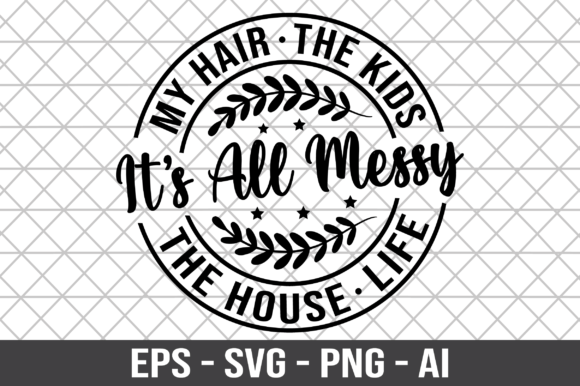
The immediate impact of My Hair the Kids Its All Messy the House is one of relatable warmth. The layout is balanced, likely featuring a mix of playful typography and perhaps illustrative elements that suggest movement or disarray. For an embroidery project, this visual personality is crucial. It needs to feel organic, not rigid. When evaluating the vector files provided—AI, EPS, SVG, and the transparent PNG—I looked closely at the line weights and spacing.
For embroidery, spacing is everything. If the letters are too close together, the satin stitch or fill stitch areas might merge, creating a blob rather than readable text. Conversely, if the design is too sparse, it may lack presence on larger items like tote bags. This design appears to strike a good middle ground, offering enough detail to be interesting without becoming a nightmare of thread breaks and jump stitches. The mood is casual and inviting, making it perfect for products that aim to comfort or amuse the buyer.
Real-World Application: From Sweatshirts to Tote Bags
To truly test a design, you must imagine it stitched out. I visualized My Hair the Kids Its All Messy the House on a heather grey crewneck sweatshirt. This is a classic use case for custom apparel. The texture of the fleece provides a soft background that allows the thread colors to pop. Using a contrasting thread color, such as a deep charcoal or a vibrant mustard, would enhance readability. The design’s theme fits perfectly here, appealing to parents who wear their busy lives with pride.
Another strong candidate for this embroidery file is the canvas tote bag. Tote bags are staples for Etsy sellers and craft fair vendors. Because canvas is a sturdy, woven fabric, it handles stitch density well. However, you must ensure the design is scaled correctly. If the text is too small, the intricate details might get lost in the weave of the fabric. If it is too large, it might distort the bag’s structure. I recommend creating a printable mockup first to gauge the proportions before committing to the hoop.
For those interested in baby embroidery or nursery decor, this design could work on a pillow cover or a blanket, provided the scale is adjusted. The humorous tone adds a layer of authenticity to handmade gifts, moving away from overly polished, unrealistic portrayals of parenthood. It feels genuine, which builds trust with customers looking for personalized gifts that reflect their actual experiences.
Technical Considerations and Stitching Challenges
While the design is versatile, it is not without its technical demands. As a reviewer, I must point out where caution is needed. If you plan to use this on stretchy fabrics like jersey knits for t-shirts, proper stabilization is non-negotiable. A cut-away stabilizer is often better than tear-away for garments that will be washed frequently, as it prevents the stitches from puckering over time.
Pay close attention to the smaller elements of the design. If My Hair the Kids Its All Messy the House includes fine lines or small decorative accents, these may require a running stitch or a very narrow satin stitch. On textured fabrics, these details can disappear. I always advise testing the design on scrap fabric first. Check the stitch density in your software if you are converting the vector to an embroidery format yourself. High density can lead to fabric stiffness and thread breaks, while low density might look skimpy.
Dark fabrics present another challenge. If you are stitching on black or navy, you need high-contrast thread colors. Light pastels or bright whites work well, but avoid mid-tones that blend into the background. Also, consider the hoop size. Ensure your machine’s hoop can accommodate the full width of the design without needing to re-hoop, which can cause alignment issues.
Commercial Viability and Brand Consistency
For small shop products and commercial embroidery projects, consistency is key. This design offers a strong brand message for businesses targeting parents, caregivers, or anyone who appreciates candid humor. It enhances the perceived value of the finished product because it speaks directly to the customer’s identity. When a buyer sees this on an embroidered patch or an apron, they feel seen. That emotional connection drives sales.
However, before selling, you must verify the licensing terms. The product description states you receive AI, EPS, SVG, and PNG files. It does not explicitly state the commercial license terms for the embroidery conversion. Always confirm whether you are allowed to sell finished items made with this design. Many designers allow personal use but require an extended license for commercial sales. Protect your business by clarifying this upfront.
Practical Designer Notes for Best Results
To get the most out of My Hair the Kids Its All Messy the House, follow these practical steps:
- Test on Scrap Fabric: Never stitch directly on your final garment. Use a similar fabric weight and texture to check tension and alignment.
- Check Thread Contrast: View your design in black and white to ensure the elements are distinct. If it looks muddy in grayscale, it will look muddy in thread.
- Review Stitch Density: If you are digitizing this yourself from the vector file, keep density moderate. Too many stitches can perforate delicate fabrics.
- Confirm Hoop Size: Measure the design dimensions against your available hoops. A 5x7 inch hoop is common for this type of phrase, but check your specific file size.
- Inspect Small Details: Zoom in on the vector file. Are there tiny anchor points or overlapping lines that might cause machine errors? Clean up the file if necessary.
- Use Proper Stabilizer: Match the stabilizer to the fabric. Cut-away for knits, tear-away for wovens, and wash-away for delicate or sheer materials.
In conclusion, My Hair the Kids Its All Messy the House is a strong contender for any maker’s library. It balances humor with style, offering a versatile asset for holiday embroidery, everyday wear, and home goods. By paying attention to fabric choice, stabilization, and stitch quality, you can transform this digital asset into a high-quality finished product that resonates with customers. Whether you are an experienced Etsy seller or a hobbyist making gifts for friends, this design offers a charming way to celebrate the beautiful mess of life.