Reviewing Hello Little One for Embroidery
As a designer who spends half my life digitizing and the other half stitching, I have learned that not every pretty graphic translates well to thread. When I first pulled up Hello Little One, my initial reaction was one of cautious optimism. The design carries a gentle, welcoming mood that is immediately apparent. It feels soft, approachable, and inherently sentimental. For those of us in the Crafts industry, finding a balance between aesthetic appeal and technical stitchability is the holy grail. This piece, categorized under Graphics, presents itself as an inspirational quote, but its true value lies in how it performs when put under the needle.
The First Impression: Mood and Layout
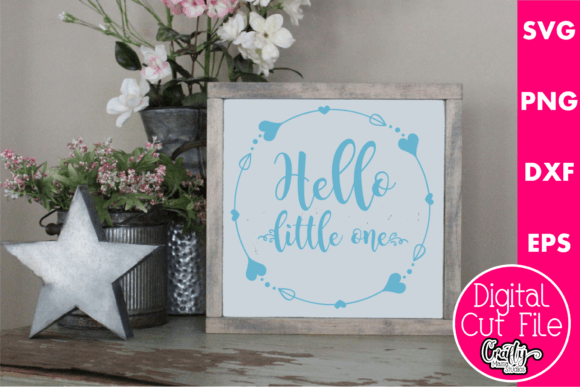
The visual personality of Hello Little One is distinct. It does not shout; it whispers. The layout suggests a focus on typography mixed with subtle decorative elements, creating a composition that feels balanced rather than cluttered. In the world of embroidery, whitespace is just as important as the stitches themselves. A design that is too dense can pucker fabric, while one that is too sparse can look unfinished. From a reviewer’s standpoint, this design appears to respect that balance. The shapes seem fluid, avoiding sharp, jagged corners that often cause thread breaks or registration issues during high-speed machine embroidery.
I imagine this design sitting comfortably in a nursery setting or adorning a soft baby blanket. It creates an emotional connection before a single stitch is made. For small business owners and Etsy sellers, this emotional resonance is crucial. Customers are not just buying a stitched pattern; they are buying a feeling of warmth and care. The design’s inherent gentleness makes it a strong candidate for products meant to comfort or celebrate new beginnings.
Real-World Application: From Screen to Stitch
To truly evaluate Hello Little One, I mentally placed it into several real-life production scenarios. Let’s consider a custom embroidered tote bag. Tote bags are typically made from canvas or heavy cotton, which provides a stable base for stitching. Here, the design would likely shine. The contrast between the thread and the natural fabric texture would highlight the details of the inspirational quote. However, I would be mindful of the stitch density. If the design relies heavily on fill stitches, it could make the tote bag stiff in that specific area. A mix of satin stitch for borders and running stitch for finer details would be ideal to maintain the fabric's drape.
Another common application is sweatshirt embroidery. Hoodies and crewnecks are popular items for personalized gifts. The fleece interior of a sweatshirt adds bulk, so hoop size and stabilizer choice become critical. I would recommend using a cut-away stabilizer to prevent the design from pulling or distorting over time, especially since sweatshirts are washed frequently. The Hello Little One design, with its likely moderate complexity, should sit well on the chest or sleeve without overwhelming the garment. It offers a boutique feel that elevates a basic blank into a custom apparel piece worth a higher price point.
For baby embroidery, such as onesies or receiving blankets, the stakes are higher. Babies have sensitive skin, and their clothes undergo rigorous washing. If this design includes small, intricate lettering, I would advise checking the legibility after stitching. Tiny text can sometimes merge together if the thread tension is not perfect. Using a high-quality rayon or polyester thread with a slight sheen can enhance the visual appeal, making the letters pop against pastel fabrics. The design’s suitability for baby items depends largely on whether the smallest elements hold up without becoming a tangled mess of thread.
Navigating Technical Challenges
While Hello Little One is visually appealing, there are areas where caution is necessary. Curved surfaces, like caps or hats, present a unique challenge. Embroidering on a curved brim requires precise hooping and often a specialized cap frame. If the design has wide horizontal spans, it might distort on the curve of a cap. I would recommend testing the design on a scrap piece of similar fabric stretched in a cap frame before committing to a final product. Additionally, textured fabrics like terry cloth or waffle knit can obscure fine details. On these materials, a backing or topping stabilizer is essential to keep the stitches floating above the texture rather than sinking into it.
Dark fabrics also require strategic planning. If you are stitching Hello Little One on a navy or black garment, thread color contrast is key. Light pastels or white threads will stand out beautifully, but you must ensure that the underlying fabric does not show through gaps in the stitching. This is where stitch density plays a role. If the design is too open, the dark fabric might peek through, breaking the visual continuity. Conversely, if it is too dense, it may create a hard, plastic-like feel on the fabric. Finding the middle ground is part of the designer’s job.
Enhancing Product Value and Brand Consistency
From a business perspective, the choice of design assets directly impacts brand consistency. For an Etsy seller specializing in handmade products, using a cohesive style across different items builds trust. Hello Little One fits well within a brand identity that values simplicity, warmth, and inspiration. It is versatile enough to be used on various products, from kitchen towels to pillow covers, allowing for a unified collection. This versatility increases the perceived value of the shop, showing customers that the seller has a keen eye for design.
Moreover, the professionalism of the finished product reflects on the seller. A clean, well-digitized embroidery file results in fewer thread breaks, less trimming, and a faster production time. This efficiency allows crafters to scale their small shop product lines without sacrificing quality. When a customer receives a personalized gift that looks crisp and durable, they are more likely to leave a positive review and return for future purchases. The design’s ability to look good in both light and dark mockups ensures that marketing materials, such as printable mockups or digital product previews, will accurately represent the final item.
Practical Notes for the Embroiderer
Before launching into a large batch of commercial embroidery projects, I always advise a few practical steps. First, test the design on scrap fabric. This simple step can save hours of frustration. Check how the thread colors interact with the fabric texture. Does the satin stitch lay flat? Are there any jumps or trims that seem excessive? Second, confirm the hoop size required. Ensure your machine can accommodate the dimensions of Hello Little One without needing to re-hoop, which can lead to alignment errors.
It is also vital to review the licensing terms. The product description mentions SVG, EPS, DXF, and PNG formats, which are commonly used for cutting machines like Cricut, but for embroidery, you need to ensure you have the correct embroidery file format compatible with your machine (such as PES, DST, or JEF). The description provided lists vector and image formats, so if you are using this for machine embroidery, you may need to digitize it yourself or confirm if an embroidery-specific version is available. Always clarify whether the license allows for selling finished physical items versus reselling the digital file itself.
Finally, consider the washability. Test a stitched sample through a few wash cycles. Does the thread fade? Does the fabric pucker around the design? These real-world tests provide the confidence needed to promise durability to your customers. By treating Hello Little One not just as a graphic, but as a functional component of a tangible product, you ensure that your handmade creations stand the test of time.