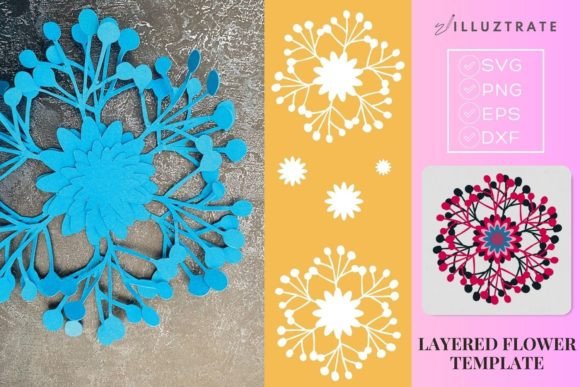
Reviewing the Layered Flower Template Paper Flower
As a designer who spends half my life digitizing and the other half stitching, I have learned that not every pretty graphic translates well into thread. When I first pulled up the Layered Flower Template Paper Flower, my initial reaction was cautious optimism. The aesthetic is undeniably charming, evoking the delicate precision of paper crafting, but translating that crisp, layered look into a machine embroidery design requires careful consideration of stitch types and fabric behavior.
This review comes from a place of practical application. I am not just looking at the preview image; I am thinking about how this embroidery file will behave on a Tuesday afternoon when I have three custom orders due and a hoop full of tricky knit fabric. If you are an Etsy seller, a boutique owner, or a hobbyist looking to elevate your handmade product lineup, here is my honest assessment of how this design performs in the real world.
First Impressions: Mood and Visual Personality
The Layered Flower Template Paper Flower carries a soft, organic mood. It does not scream for attention with aggressive outlines or overly complex shading. Instead, it relies on shape and layering to create depth. For those of us working in Crafts and Graphics, this is a versatile asset. The design feels modern yet timeless, making it suitable for a wide range of demographics, from nursery decor to sophisticated bridal accessories.
What stands out immediately is the potential for texture. In paper crafting, layers create shadows. In embroidery, we mimic this through fill stitch density and satin stitch borders. The visual personality of this template suggests a gentle, romantic appeal. It is not overly masculine or strictly juvenile, which gives it broad commercial viability. However, the success of this look depends entirely on your choice of thread colors. A monochromatic palette will highlight the structural layers, while contrasting colors will make each petal pop individually.
Real-World Application: From Digital File to Finished Product
To truly test the value of this design, I imagined a specific client scenario. A local boutique owner wanted a line of custom apparel for spring, specifically lightweight linen tote bags and cotton sweatshirts. She needed a design that felt artisanal but could be produced efficiently. The Layered Flower Template Paper Flower fit this brief perfectly, but with caveats.
For the tote bag design, the flower worked beautifully. The sturdy canvas provided the necessary support for the stitches, allowing the layers to sit flat without puckering. The result was a high-end, personalized gift feel that justified a higher price point. Customers often equate intricate-looking embroidery with higher value, and this design delivers that perception without requiring hours of machine time if optimized correctly.
However, moving to the sweatshirt embroidery presented a different challenge. Sweatshirt fleece is thick and textured. If the stitch density is too low, the fabric shows through, breaking the illusion of the layered paper effect. If it is too high, the design becomes stiff and uncomfortable against the skin. In this context, I found that using a lighter weight stabilizer and adjusting the underlay was crucial. The design shines here as a holiday embroidery accent or a spring refresh, but it requires technical tweaking to look professional on stretchy or thick fabrics.
Navigating Technical Challenges and Fabric Choices
While the Layered Flower Template Paper Flower is visually appealing, it is not a "load and go" solution for every project. There are specific scenarios where you need to proceed with caution.
- Small Hoop Sizes: If you are shrinking this design for a small hoop size, such as a 4x4 inch hoop for baby items, you risk losing the definition between layers. Tiny details can merge into a blob of thread. Always check the smallest element of the design to ensure it remains distinct.
- Textured and Stretchy Fabrics: As mentioned with the sweatshirt, fabric texture matters. On highly textured towels or stretchy knits, the clean lines of the paper-style flower can distort. Using a cut-away stabilizer is non-negotiable here to maintain the integrity of the embroidery project.
- Dark Fabrics: If you are stitching on dark fabric, you must consider the underlay and potentially use a lighter thread for the base layers. Without proper contrast, the subtle layering effect gets lost in the background.
- Curved Surfaces: Applying this to caps or curved hats requires careful hooping. The layered petals may pull unevenly if the fabric is not stabilized perfectly, leading to gaps or puckers that ruin the finished product.
Enhancing Brand Value and Customer Trust
For small shop product creators, consistency is key. Using a cohesive set of design assets helps build brand recognition. The Layered Flower Template Paper Flower offers a level of sophistication that can elevate a basic item into a boutique-worthy piece. When customers see clean, well-executed stitching, their trust in your craftsmanship increases.
This design is particularly effective for baby embroidery and wedding gifts. The soft, layered look appeals to buyers seeking something delicate and special. By presenting high-quality printable mockup images that accurately reflect the stitched outcome, you manage customer expectations and reduce returns. Remember, the perceived value of your commercial embroidery work is directly tied to the clarity and cleanliness of the final stitch-out.
Practical Notes for the Embroidery Designer
Before you commit to producing a large batch of items using this digital embroidery file, take these practical steps:
- Test on Scrap Fabric: Never skip this step. Stitch the design on the exact fabric you plan to use for production. Check for puckering, thread breaks, and color blending.
- Check Thread Contrast: Experiment with different thread colors. Sometimes, using two shades of the same color creates a more subtle, elegant layering effect than high-contrast colors.
- Review Stitch Density: If the design feels too stiff, reduce the density slightly. If it looks sparse, increase it or add a second layer of fill.
- Inspect Small Details: Zoom in on your software. Are there any tiny jumps or unnecessary trims that could slow down production? Clean up the path if necessary.
- Confirm Licensing: Since this file originates from a SVG cut file context, ensure you have the rights to use it for commercial embroidery. Some graphic licenses do not automatically cover physical goods sold for profit. Always verify the terms before listing items on Etsy or in your boutique.
In conclusion, the Layered Flower Template Paper Flower is a strong contender for designers looking to add a touch of organic elegance to their portfolio. It bridges the gap between digital precision and handmade warmth. While it requires thoughtful execution regarding fabric choice and stabilization, the payoff is a versatile, attractive design that resonates with customers seeking quality and charm. Whether you are creating an embroidered patch, a custom apparel line, or a simple personalized gift, this design offers the flexibility and aesthetic appeal needed to succeed in today’s competitive craft market.